Posts

Showing posts with the label Bharat

India China Relations

Image
India and China have had ancient civilizational contact. In recent times, the processof development and diversification of bilateral relations has gathered pace. The focus is on enhancing mutually beneficial cooperation while simultaneously addressing differences. India China Political Relations The People s Republic of China (PRC) was established on October 1, 1949, and India was the second non-communist country to recognize it. Within a few months, on April 1, 1950, India and China established diplomatic relations. The two countries also jointly expounded the Panchsheel (Five Principles of Peaceful Co-existence) in 1954. Chinese Premier Zhou Enlai visited India in June 1954 and Prime Minister Nehru visited China in October 1954. The circumstances leading to the attack by China in 1962 led to a serious setback in bilateral relations. India and China restored ambassadorial relations in August 1976. Higher political level contacts were revived by the visit of the then External Af...
Indian New Zealand Relations

Image
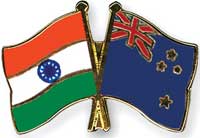
India- New Zealand have traditionally enjoyed cordial and friendly relations based on common linkages of Commonwealth, parliamentary democracy, English language and sports. Agreements Signed : Trade Agreement - October 1986 Agreement on avoidance of Double Taxation - October, 1986 Civil Aviation Agreement between India and New Zealand August 1997 MOU on Scientific and Technical Cooperation between ICAR and Horti Research of New Zealand - March 1998 MoU of Technical Cooperation between Department of Agriculture and Cooperation, Ministry of Agriculture, GOI and Ministry of Agriculture and Forestry Regulatory Authority of New Zealand on Cooperation on Plant Quarantine Issues, April 1999 Arrangement between India and New Zealand for cooperation in the area of Information Technology, December 2001 MoU between Indian Institute of Carpet Technology (IICT) and the Wool Research Organisation of New Zealand (WRONZ), May 2003 MOU on Cooperation between the Indian Co...

Kuwait India Political and economic Relations

Warm and friendly contacts between India and Kuwait go back several centuries and our excellent bilateral relations have been consolidated by the continuous intermingling of our peoples and civilizations. Till the discovery of oil, Kuwait’s economy revolved around its fine harbor and three maritime-linked activities, all of which had an Indian perspective: building ships using teak and other timber brought from India; pearl diving and fishing; and voyages to India on dhows carrying dates that were traded for wood, rope, rice, tiles, cloth and spices. Until 1961, Indian Rupee was the legal tender in Kuwait. The Kuwaiti ruling family too has had longstanding ties with India. Cultural affinities, historical trade and other linkages, geographic proximity, and a large presence of Indian expatriates in Kuwait, have sustained and nurtured the close relationship, which encompasses significant political, trade and economic interests. VVIP visits from India to Kuwait: These have been by HE Vi...

India Switzerland Bilateral Relations

Image
Switzerland and India have had cordial and friendly relations since India became independent. The relationship is based on shared values of democracy, multiculturalism and the rule of law. Independent India’s policy of non-alignment and Switzerland’s traditional policy of neutrality helped to develop a close understanding between the leaders of the two countries in the early years. A Treaty of Friendship between India and Switzerland was signed at New Delhi on August 14, 1948, one of the first such treaties to be signed by the independent India. The Treaty provided for the establishment of diplomatic missions between the two countries and diplomatic missions were opened in Berne and Delhi soon after its conclusion. During the course of 2008, India and Switzerland celebrated the 60th anniversary of the signing of the Friendship Treaty, an important milestone in the annals of our bilateral relations. In recognition of the growth of multi-faceted bilateral relationship in the past six...

Indian Government Inaugurated Rajiv Gandhi Advocates Training Scheme

Image
Rajiv Gandhi Advocates Training Scheme was inaugurated in the National Law University Delhi today. Minister of Law & Justice Dr. M. Veerappa Moily, Chief Minister of Delhi Smt. Sheila Dikshit and the Chief Justice of Delhi High Court and Chancellor of National Law University Delhi Mr. Justice Dipak Misra were present on the occasion. Presiding over the function, the Minister of Law & Justice said “Globalization of law includes global connections, global interdependence, global information, global finance, global governance and global rights. Legal profession in the 21st Century must focus on the rapid changes in legal education and the legal profession that are taking place throughout the world, the phenomenon that is often referred to as the globalization of legal profession.” The primary purpose behind the development of the lawyers’ training program is to standardize the training of future generations of lawyers in the globalization era. Achieving this goal is...

India Governemnt Taking strong steps against Drug Abuse and Illicit Trafficking

Image
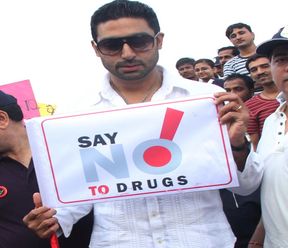
Every Year 26th of June is observed as an “International Day Against Drug Abuse and Illicit Trafficking ”. Say No to Drugs  The Government recognizes Drug abuse as a psycho-socio-medical problem, which can be best handled by adoption of a family/community-based approach by active involvement of NGOs/Community BasedOrganisations (CBOs) and has been taking several initiatives to help say no to drugs. The Ministry of Social Justice and Empowerment, as the nodal ministry for drug demand reduction, coordinates and monitors all aspects of drug abuse prevention which include assessment of the extent of the problem, preventive action, treatment and rehabilitation of addicts, dissemination of information and public education. The Ministry provides community-based services for the identification, treatment and rehabilitation of addicts through voluntary organizations. Indian Government's  strategy for demand reduction is three pronged: a)Awareness Generation and educatin...

India - Pakistan Joint statement after the meeting between the Foreign Secretaries

Image
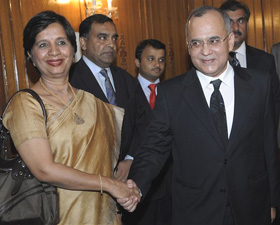
Under the resumed dialogue process, the Foreign Secretaries of Pakistan and India met in Islamabad, on 23-24 June 2011 for bilateral talks on Peace and Security including CBMs, Jammu and Kashmir and promotion of friendly exchanges. Three sessions of talks were held. 2. The talks were held in a frank and cordial atmosphere. Both sides reiterated their intention to carry forward the dialogue process in a constructive and purposeful manner. 3. The issues of Peace and Security, including CBMs, were discussed in a comprehensive manner. Both sides emphasized the importance of constructive dialogue to promote mutual understanding. 4. They noted the ongoing implementation of various Nuclear and Conventional CBMs. They also decided to convene separate Expert level meetings on Nuclear and Conventional CBMs to discuss implementation and strengthening of existing arrangements and to consider additional measures, which are mutually acceptable, to build trust and confidence and promote peace a...

Economist Amartya Sen Speech on Indian Economy ,History and Politics of India

Image
Affiliations such as nationality are not only matters of entitlement, they all also involve attachment and responsibility. In a rapidly changing country, as India certainly i s, one of the duties that we have as Indians is to ask: what kind of a country this i s . This may lead to the further question: what does it demand of us, at this time? I am very aware that it is rather reckless to ask grand questions of such apparent naivety. But since I don't indulge in other dangerous activities, like taming lions, or being on the trapeze, or standing for parliamentary elections, perhaps I ought to show some bravery and foolhardiness here. Hence this lecture. Amartya Sen on Indian History , Indian Culture ,  Indian Politics and Indian Economy India is of course a large country, with a huge population. The relative size of the Indian population is not a new phenomenon, contrary to the presumption, which seems fairly common in the world today, that India has become relatively enormo...